
Mental Health and Wellbeing
We are very proud to be a 'My Happy Mind School!'
As a whole school program grounded in science and dedicated to building positive mental wellbeing, myHappymind helps children understand how their brains work and creates a culture that helps to build children's resilience, confidence, and self-esteem. myHappymind also teaches the children how to self-regulate and manage their emotions in stressful times, allowing them to be their very best selves!
Learn more here: https://myhappymind.org/
myHappymind Module Descriptions
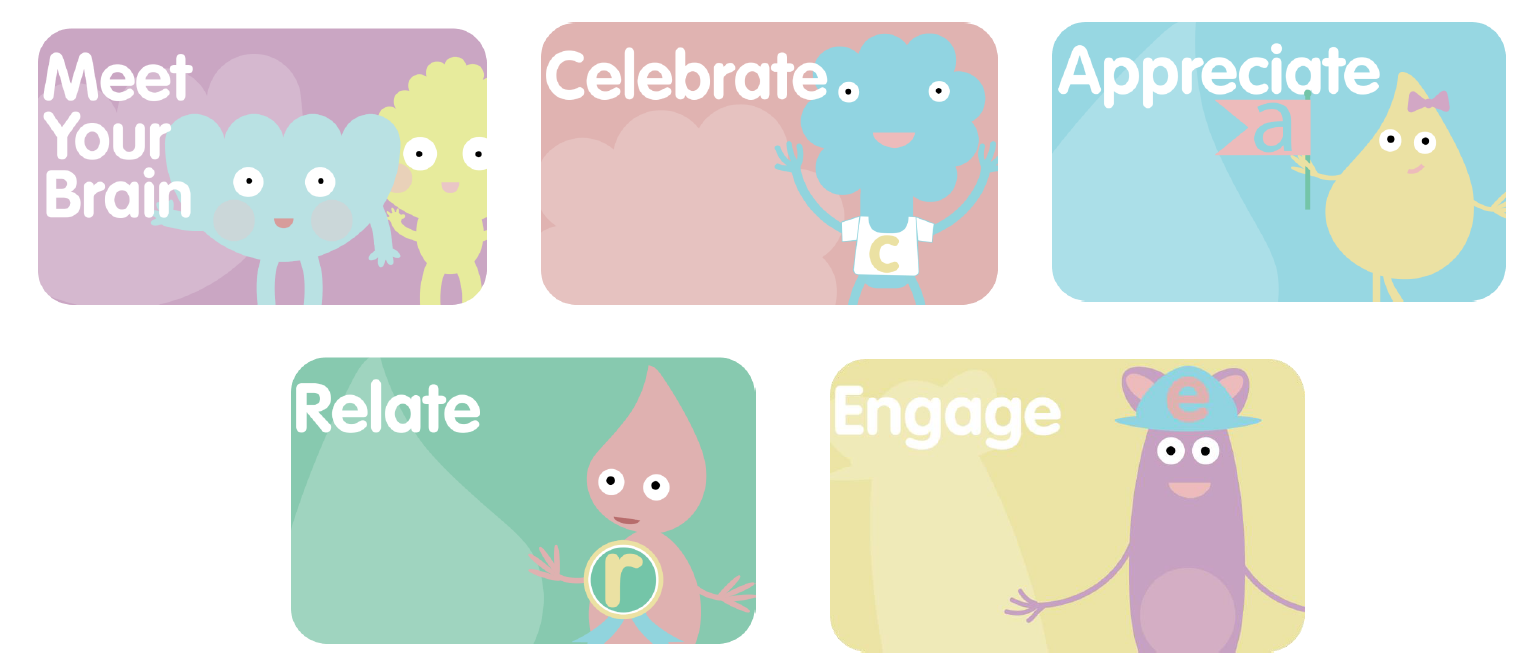
- Your Brain: Understanding how your brain works and how to ensure we look after it so that we can manage our emotions and be at our best. Growth mindset is a key part of this too.
- Understanding your unique character strengths and learning to celebrate them. This is a fantastic module for building self-esteem.
- Understanding why gratitude matters and how you can develop gratitude as a habit. Gratitude is key to well-being and resilience and we're all about making it a habit!
- Understanding why positive relationships matter and how to build them. We're focussed on the building blocks of good relationships and friendships.
- Understanding how to set meaningful goals that matter and how to keep resilient in times of challenge. This module is all about building self-esteem and resilience too.
myHappyMind Accreditation
We are proud to announce that we are a myHappymind Silver Accredited school!
This means that as a school we consider the mental health and wellbeing of our children as one of our top priorities. We have created a whole school culture that helps build our children's resilience, confidence and self esteem as well as teaching them how to self regulate in those stressful times.
This Accreditation badge has been awarded thanks to all the effort our staff, children, governors and parents have put in to bring the lessons of myHappymind to life all around our school!
To Learn more about the myHappymind for Schools programme visit their website here - https://myhappymind.org/
LDST 5 Ways to Wellbeing
At St Andrew's Primary School, we are committed to supporting the emotional health and wellbeing of our pupils and staff. We understand that everyone experiences life challenges which can make us vulnerable and at times, we may need additional emotional support. We take the view that positive mental health is everybody’s business and that we all have a role to play.
'It's ok to not be ok!'
At our school we:
- Help children to understand their emotions and feelings better
- Help children feel comfortable sharing any concerns or worries
- Help children socially to form and maintain relationships
- Promote self esteem and ensure children know that they count
- Encourage children to be confident and ‘dare to be different’
- Help children to develop emotional resilience and to manage setbacks
- Support through our vision and values
- Take part in various 'raising awareness' days where we focus on mental health and wellbeing and raise awareness of various mental health charities.
Our Deputy Head Teacher/SENCO Mrs Dwan, is our Senior Mental Health Lead and she works together with members of our teaching and non teaching staff, parents/carers, Governors, MAT, and our Y6 Mental Wellbeing Champions, to support the mental wellbeing of our whole school community. Mrs Dwan has a background in psychology, a Post Grad Certicate in Supporting Vulnerable Learners, the NASENCO qualification, has completed Senior Mental Health Lead training with ROAR and has also completed training with our Y6 Mental Wellbeing Champions through One Goal.
All children have the option of attending Chill Out Club each day, during lunch breaks, where they can access support and take part in activities to help them to look after their mental wellbeing.
We have various sensory and nurture spaces across the school as well as cal areas in each classroom, all of which have been carefully set up in partnership with the children, to support with self regulation and recognising emotions.
All classes also take part in whole class sensory circuits thoughout the day as well as children having access to sensory circuits in shared areas across the school.
We pride ourselves on the fact that our children can speak eloquently about mental health and what we do at school support our own and other people's mental wellbeing.
We have several staff who are trained to support bereavement, loss, family breakdown and can also deliver nurtured based curriculums. We also have good relationships with outside professionals which allow us to make quick referrals outside of school if they are needed.
If you feel that your child or another member of your family, requires additional Social, Emotional and Mental Health (SEMH) support, please contact Mrs Dwan paula.dwan@ldst.org.uk
There are lots of amazing resources on line to help support children's metal wellbeing:-
https://www.theschoolrun.com/best-wellbeing-apps-for-kids
https://www.mentalhealth.org.uk/a-to-z/c/children-and-young-people
https://en.calameo.com/read/000777721945cfe5bb9cc?authid=Xu9pcOzU3TQx
https://www.gordonchildrensacademy.org.uk/wp-content/uploads/2020/04/Understanding-emotions-activity.pdf
ANXIETY | Top phrases for calming anxious children
In this video I explore three types of phrases (and lots of actual examples) that can be really helpful when trying to reassure or calm children who are anxi...
Many children need lots of sensory input in order to feel safe within their environment. If your child has sensory needs, a good idea is to make a sensory box for them to access whenever then need it:-
Make your own sensory box at home
Below, are some items you could use in order to give yourself some sensory time while at home. You will need some sort of box to put your things in. Just pick a few things from the list that you would like. Why not spend some time decorating it as well?
Skipping rope – You may have one of these already but you could easily make your own.
Resistance bands- you may have some of these in the house if a parent uses them for exercise.
Do you have a kaleidoscope or an hourglass for you to look at and use to calm down?
Pop a favourite book in to read.
Activity books are often relaxing- dot to dots, mazes, word searches, I Spy, etc.
Stress balls can be made out of balloons and sand or flour.
Play-doh and silly putty is very relaxing if worked in the hand.
A photo album filled with photos of family and friends can be very calming to browse through!
A small blanket made with your favourite texture.
Bubble wrap is very satisfying!
Bubbles- to encourage breathing out.
A Rubik’s cube to fiddle with.
White board/magna doodle to doodle with.
Eye mask- maybe you have a superhero mask that could be adapted?
Tissue paper to rip up. Check your parents are happy for you to this first!
Light up toys – a torch or a fairground toy.
Plastic snow globe - Acts like a calm down or sensory bottle.
Snacks with a variety of textures like crunchy pretzels or crackers, chewy dried fruit, or soft marshmallows.
Notepad to scribble your thoughts.
A CD of some calming music.